What do types mean in Voidling Bound?
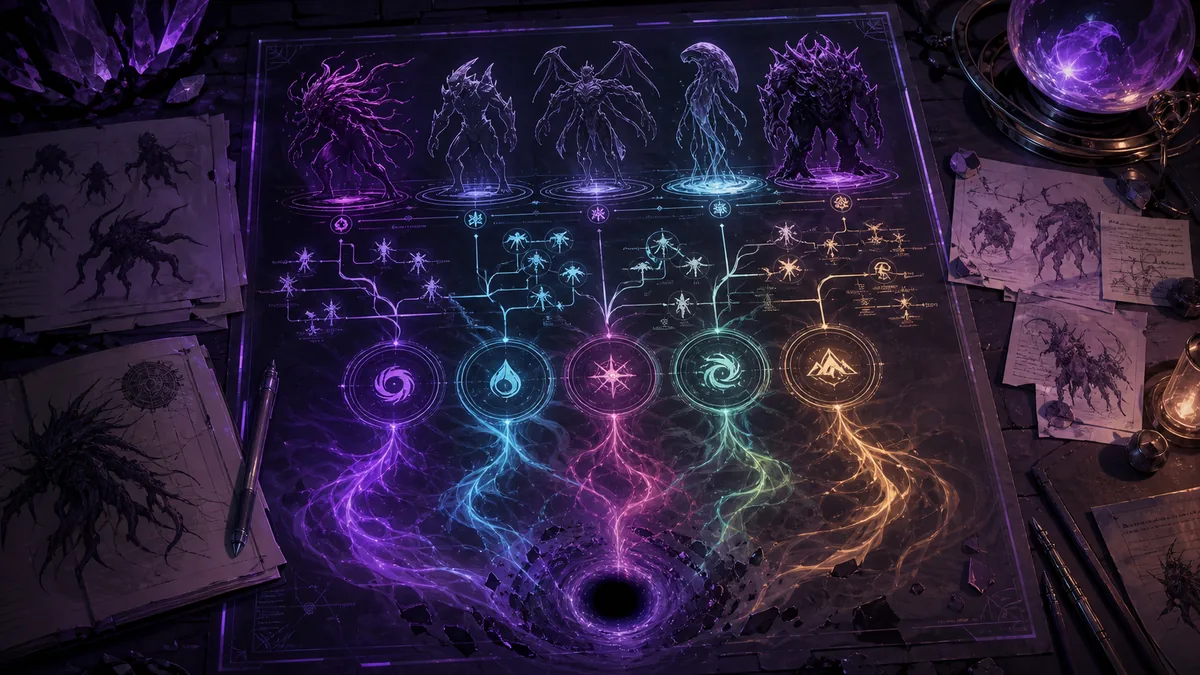
In Voidling Bound, “types” usually means a mix of elemental alignment, creature role, attributes, and evolution direction rather than a single static chart. Official copy highlights elemental alignment, branching evolution, mutated perks, five attributes, and direct third-person shooter combat. That means a type decision is useful only when it explains how a Voidling survives, deals damage, moves, and supports a player-controlled fight.
The safest way to use this guide is to treat types as planning language. Pick the combat job first, then compare the Voidling’s element, ability behavior, attribute needs, and evolution branch. If a future patch changes elements, perks, enemy resistances, or attribute scaling, the exact recommendation should be updated, but the decision process remains useful.
This page does not invent a complete resistance table. Until the current in-game data is fully documented, use official sources, the wiki.gg project, and in-game tooltips for exact values. Use the tables below to decide what to check before investing in a creature.
The four layers behind a Voidling Bound type decision
Before choosing a “best type,” separate the decision into four crawlable checks. This prevents a build from being chosen only because the element sounds strong.
Elemental alignment
Check whether the element changes damage, role, ability feel, or encounter fit. Avoid assuming universal strengths without current evidence.
Combat role
Decide whether the Voidling should handle melee burst, ranged pressure, survival, mobility, crowd control, or boss safety.
Attribute budget
The five attributes make the type playable. A fragile damage type may need durability support; a safe type may need speed or damage.
Evolution branch
Branching evolution can shift appearance, abilities, and playstyle. Recheck the branch before committing rare breeding candidates.
How to think about elements before a full type chart exists
Voidling Bound search demand includes “types,” but current public data is still young. A good elements page should therefore explain what players should verify instead of pretending every matchup is already stable. Start by asking what the element changes in practice: damage window, range, mobility, survivability, ability uptime, or boss control.
Elemental alignment matters most when it changes a decision. If two Voidlings clear the same fight, the better element may be the one that fits your movement, cooldown rhythm, and attribute plan. If an in-game tooltip or official wiki entry lists exact interactions, use that exact source over any generic fan assumption.
| Question | Why it matters | What to verify |
|---|---|---|
| Does the element change damage or resistance? | It affects whether the Voidling is a boss answer or a farming pick. | In-game tooltip, official wiki entry, current patch notes |
| Does the element match the ability kit? | A ranged kit and a melee kit may need different stats even with the same element. | Ability description, cooldown feel, real encounter testing |
| Does evolution change the role? | A branch may turn a safe creature into a burst option or a utility option. | Evolution preview, community notes, checked date |
| Does the enemy type punish the build? | Movement-heavy fights can punish a theoretically strong element if the creature cannot survive. | Boss pattern, biome hazards, Abyss modifiers |
The five attributes that shape every type
Steam describes Voidling Bound builds through five attributes: Vitality, Power, Speed, Essence, and Agility. These are not decorative stats. They decide whether an elemental plan actually works when you are dodging, blocking, parrying, shooting, and using ultimate abilities in real time.
Because the max level and attribute budget are limited, a type guide should not say “raise everything.” Pick one primary attribute and one support attribute. The primary attribute supports the way the Voidling wins fights; the support attribute fixes the most common failure point.
| Attribute | Use it when | Common mistake |
|---|---|---|
| Vitality | The type needs to survive long boss patterns or repeated Abyss pressure. | Taking it only after the build already feels too fragile. |
| Power | The Voidling wins through direct damage, burst windows, or faster clears. | Ignoring uptime, range, and safety while chasing damage. |
| Speed | The build needs faster pressure, smoother farming, or better tempo. | Confusing speed with survivability in punishing fights. |
| Essence | Abilities, special effects, or resource-driven patterns define the role. | Investing before confirming how the kit scales. |
| Agility | Movement, repositioning, and avoiding damage are the build’s real advantage. | Using it as a generic dump stat instead of a role choice. |
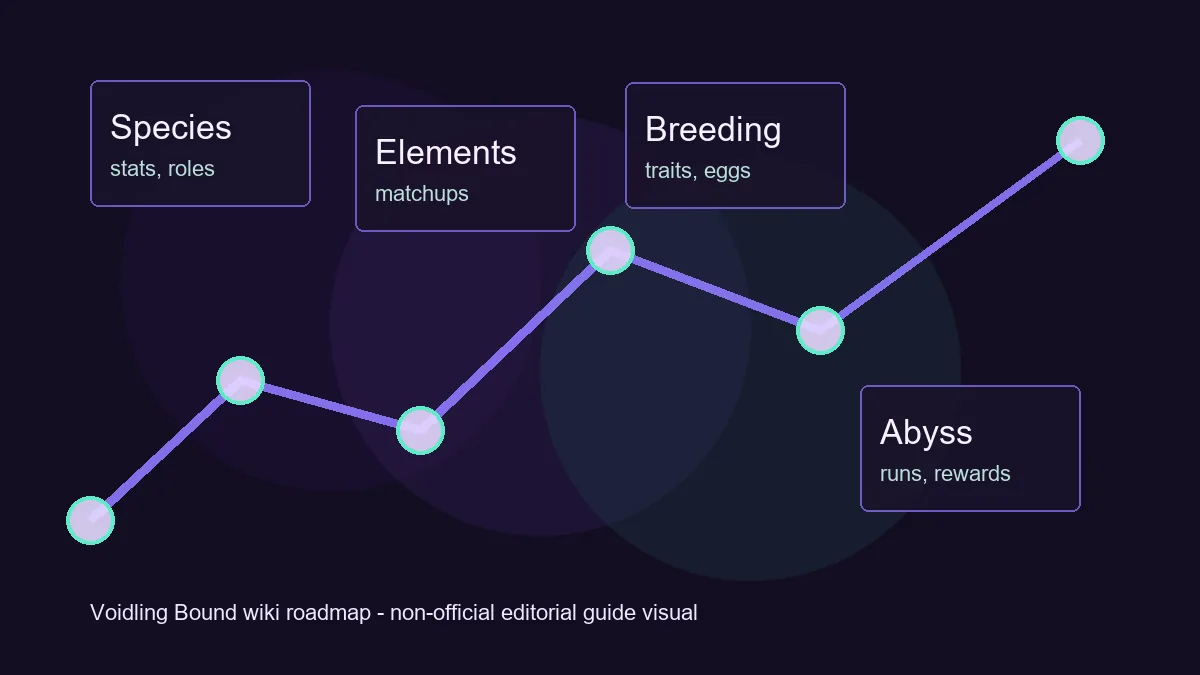
Choosing a type for builds, bosses, and Abyss runs
The practical question is not “which type is best?” It is “which type solves the next fight?” For early progression, a reliable, easy-to-control Voidling can be better than a specialized type with awkward timing. For bosses, survivability and pattern control may matter more than raw damage. For Abyss, repeatable safety and scaling become more important than one clean burst.
Breeding and gene editing add another layer. A weak candidate with a desirable element may still be worse than a cleaner candidate with better inherited traits. Treat element as one filter, not the whole decision. Once exact species data is stable, each species page should connect element, attributes, evolution branch, perks, and recommended encounters.
Beginner-safe type
Favor clear controls, enough survivability, and simple ability timing while learning the shooter layer.
Boss-focused type
Choose around the encounter: safe range, burst windows, sustain, movement, or crowd control.
Abyss-ready type
Value consistency, recovery, scaling, and how the type handles pressure across repeated rooms.
Breeding candidate
Keep promising elements only when the inherited traits and evolution plan justify long-term investment.
Common mistakes when reading type advice
Copying a type list without a patch date
Voidling Bound launched recently, so element values, perks, and balance can change. Keep a checked date.
Treating element as the whole build
A type without the right attributes and ability rhythm may fail in real combat.
Ignoring movement skill
The game is a shooter creature crafter. Dodging, blocking, parrying, and aiming affect whether a type feels strong.
Guessing exact matchups
Do not publish hard resistance or weakness tables until the current build or official wiki supports them.
Official trailer context for combat and creature roles
The official trailer is useful here because it shows why types should be judged inside real movement and combat, not only as spreadsheet labels.
Official trailer embedded from the developer-linked YouTube source. Use it as visual context, not as a substitute for current in-game values.
Sources and verification boundary
This guide combines official facts with cautious planning advice. Exact type tables should be updated from the current game, official wiki, or patch notes.
- Official Steam page - Confirms five attributes, elemental alignment language, player-controlled combat, updates, and current availability.
- Official developer website - Describes evolution, gene editing, breeding, trailer, and community links.
- Official wiki.gg project - Best place to verify mechanics, species, attributes, items, and patch-sensitive entries.
- TheGamer elements explainer - Useful SERP reference for the public “types” intent, but exact advice should still be checked in game.